
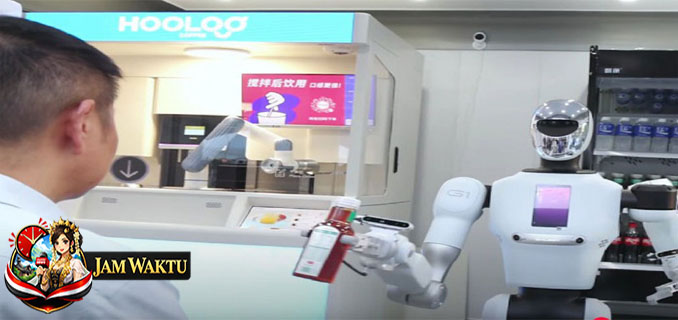
Jam Waktu – The development of retail technology in China has sparked a new debate about the future of work in the trade sector. The growing innovation of cashierless stores is seen as potentially reducing the need for human labor, including cashiers and minimarket employees, who have long been the backbone of the retail industry.
In recent years, technology and retail companies in China have competed to develop automated store systems that allow customers to shop without having to go through the checkout process. Consumers simply pick up the items they want, and the system automatically detects the purchased products and processes payment through an app or other digital technology.
One example of this innovation is seen in the Alibaba Group supermarket chain, which is developing a modern retail concept through its Hema Fresh supermarkets. In this concept, customers can scan products using a mobile app or utilize a digital payment system, eliminating the need to queue at the checkout.
This type of technology is part of a major transformation in China’s retail industry, which is increasingly relying on artificial intelligence, data analytics, and automated systems. The integration of these technologies is not only changing the way consumers shop but also how companies manage store operations, from inventory to payment systems.
Besides Alibaba, other major e-commerce companies like JD.com are also developing the concept of unmanned stores. Some stores even use sensors, cameras, and facial recognition technology to monitor customer activity and ensure transactions are automated without interaction with a cashier.
This technology works by utilizing a combination of artificial intelligence, computer vision, weight sensors, and product identification systems. When a customer picks up an item from a shelf, the system automatically records the item. When the customer leaves the store, payment is processed directly through a connected app or digital wallet.
The practicality of this technology has attracted many retail companies to adopt it. In addition to providing a faster and more convenient shopping experience for consumers, automated systems can also reduce operational costs, particularly related to labor requirements and payment processing at the cashier.
On the other hand, concerns have arisen regarding its impact on employment. Some observers believe that retail automation has the potential to reduce the number of workers in the trade sector, particularly cashiers or store employees who typically handle direct transactions with customers.
This prediction was even made by the head of JD.com, who stated that robots and automated technology could one day replace many human jobs in the retail industry.
This development has sparked a global discussion about the future of work in the retail sector. Many countries are beginning to consider how to balance technological innovation with labor protection to ensure that digital transformation does not have a significant social impact.
In Indonesia, this discourse is also gaining traction. Minimarket chains such as Indomaret and Alfamart currently employ hundreds of thousands of employees across various regions. If automated store technology becomes widespread, some jobs in this sector could potentially experience significant changes.
However, experts believe that automation does not necessarily mean total job losses. In many cases, technology actually creates new types of jobs that previously did not exist, such as digital systems managers, retail data analysts, and automated device technicians.
Furthermore, implementing cashierless stores still faces several challenges. Sensor and product recognition technology must be highly accurate to prevent transaction errors. Furthermore, security systems also need to be enhanced to prevent theft or misidentification of goods.
Nevertheless, the retail automation trend is expected to continue growing as consumers demand a fast and convenient shopping experience. The market for AI-powered checkout technology in the supermarket sector is even predicted to continue growing in the coming years as many retail companies invest in automated payment solutions.
With the rapid advancement of technology, the future of the retail industry will likely be characterized by a combination of automated stores and human labor. Companies need to find a balance to ensure technological innovation continues without ignoring its impact on the workplace.
For developing countries like Indonesia, this development serves as a reminder that digital transformation in the retail sector is inevitable. However, with the right strategy, technology can be leveraged to increase efficiency and create new job opportunities.