
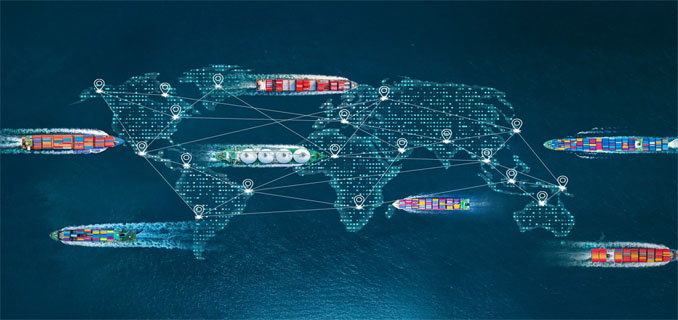
Jamwaktu.com – Over time, global trade continues to experience rapid evolution. Predictions for 2025 indicate major changes in the structure of international trade, influenced by various factors such as technological advances, changes in global economic policies, and geopolitical shifts that will impact global market dynamics. Several key trends are predicted to dominate the global market, and companies and countries must adapt to remain competitive in this new era.
1. Digitalization and E-Commerce
One of the biggest trends shaping global trade in 2025 is digitalization. Electronic commerce (e-commerce), which has grown rapidly in recent years, is expected to further dominate the global market. According to a report from the World Trade Organization (WTO), global e-commerce is expected to double by 2025.
Large companies will continue to adopt digital technologies, such as artificial intelligence (AI), the Internet of Things (IoT), and blockchain, to facilitate cross-border transactions. The global market will become increasingly digitally connected, enabling more efficient and transparent trade. Payment processes, goods delivery, and transaction recording will increasingly rely on advanced technology, making trading systems faster and more secure.
2. Geopolitical Shifts and Protectionism
Changes in international policy are also predicted to have a significant impact on global trade in 2025. Shifts in geopolitical power will play a significant role in determining the course of world trade. Major countries, such as China, India, and the United States, will increasingly compete for dominance in the global market.
One impact of this change is the possible rise in protectionism in various countries. Governments of major countries may increasingly focus on policies that protect their domestic industries, such as higher import tariffs and restrictions on foreign products. Brexit and the trade war between the US and China are early examples of this trend, which may develop further towards 2025.
However, while protectionism may increase, international cooperation in the form of free trade agreements and collaboration between countries will persist. For example, the Regional Comprehensive Economic Partnership (RCEP) trade agreement involving Asian countries is expected to strengthen the region’s economic integration.
3. Global Supply Chain Transformation
The COVID-19 pandemic has demonstrated the vulnerability of global supply chains. With major disruptions in the distribution of goods and raw materials, countries are now more cautious about relying on a single market or supplier. Predictions for 2025 indicate that supply chains will become increasingly diversified, with companies preferring to move production to countries with lower costs or closer to their main markets.
Automation and robotics will play a crucial role in supply chain management, increasing efficiency and reducing reliance on manual labor. Meanwhile, technology-based logistics and the use of drones and autonomous vehicles are expected to accelerate the delivery of goods between countries.
4. Sustainable Economy and Green Trade
With growing awareness of climate change and sustainability, the world is expected to see a major shift towards a green economy by 2025. Countries and companies will increasingly focus on environmentally friendly trade in goods and services. Stricter regulations on carbon emissions, as well as increasing demand for environmentally friendly products, will encourage companies to invest in sustainable trade practices.
Furthermore, the renewable energy market and environmentally friendly technologies such as electric cars and solar energy will continue to grow. Countries will further strengthen sustainable development policies to ensure they can compete in an increasingly sustainability-focused global economy.
5. The Role of the Digital Economy and Global Startups
In the near future, global startups will increasingly become key players in global trade, particularly in the technology and digital services sectors. Many digital-based companies will develop trading platforms that enable small and medium-sized enterprises (SMEs) to reach global markets more easily. The fintech and cryptocurrency sectors are also expected to grow, bringing about significant changes in the financial system and international transactions.