Jamwaktu.com – Amidst the hustle and bustle of urban life, the Grand Roundabout in Palangka Raya is increasingly attracting attention not only as an iconic public space, but also as a key object in the practice of humanistic street photography. In recent months, amateur and professional photographers from various regions have come to record the activities of residents in this area capturing unique moments, social interactions, and the dynamics of daily life captured in every shot.
The Grand Roundabout is one of the city’s central points and a favorite public space for Palangka Raya residents. This large circular area, with its iconic monument and surrounding open park, is now not only a place to gather, relax, and exercise, but also a powerful backdrop for photographs that capture the real life of the city’s residents in a natural way.
In the practice of street photography, photographers strive to capture spontaneous moments without staging scenes, so the resulting photos often convey uncontrived life stories a direct reflection of social realities on the ground. This genre is known for presenting opportunities for candid encounters with people and public spaces, where each frame can be meaningful as a visual story about the daily lives of city residents.
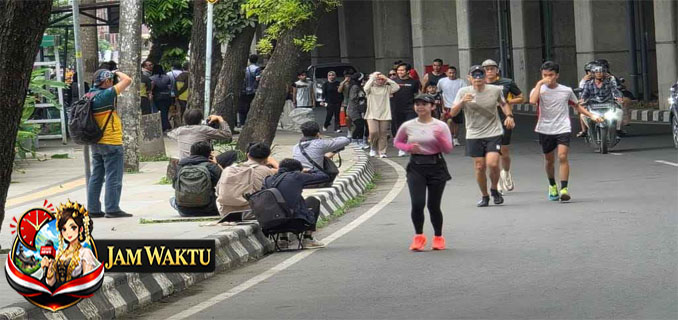
Sunday mornings are one of the favorite times for photographers to photograph the Grand Roundabout. At that time, the area was filled with people cycling, jogging, or simply taking a leisurely stroll enjoying the morning air. The car-free* atmosphere made the streets around the roundabout more lively, with residents of all ages chatting, interacting, and going about their daily routines without the presence of motorized vehicles. This created numerous opportunities for photographers to capture spontaneous moments that reflected the dynamic of urban life. Rifki Nugraha, a street photographer who frequently works at the Big Roundabout, said that storytelling through photographs is the main strength of street photography.
“Here, we’re not just photographing passersby or interesting objects, but how we tell what’s happening behind the scenes in people’s lives. Every expression, interaction, and movement of residents at the Big Roundabout has its own story,” he explained.
Rifki frequently shares his photos on social media platforms and local photography communities, sparking discussions about residents’ relationships with their public spaces. This approach reflects the humanist principle of street photography placing humans as the primary subject and center of visual attention. The photographs created at the Big Roundabout often convey more than just aesthetic images; They serve as visual documents that demonstrate how citizens interact with the city, creating collective memories and powerful social narratives.
It’s not just locals who become the objects of photography. Many visitors from outside the area are also drawn to photo walks here, combining visual exploration with local cultural experiences. Several photography communities even hold regular meet-ups at the Bundaran Besar, making the area a creative meeting point for exchanging ideas, techniques, and the stories behind each photograph.
This phenomenon is inextricably linked to advances in camera technology and social media, which have made it increasingly easy for anyone to become a street photographer. Digital cameras, high-quality smartphones, and photo-sharing platforms have democratized the practice of photography enabling more individuals to explore the city’s vibrant landscapes and share urban stories through photos.
Furthermore, the photographs of the Bundaran Besar collected in online archives showcase a diverse range of urban life themes. From the smiles of children playing ball in the morning, to street vendors displaying their wares, to couples enjoying the sunset while sitting on the edge of a park all become real-life portraits that form the city’s visual text. This collection is then shared with the wider public, giving new meaning to a public space that was once considered merely a crossroads.
For the residents of Palangka Raya, the presence of these street photographers has enriched their perspective on the roundabout itself. More than just a place to relax, the Big Roundabout is now seen as a reflection of social and cultural life – a city stage that daily presents a different drama.
With the growing number of photographs emerging from the Big Roundabout, it’s no surprise that this area has become a clear example of how urban space and the activities of its residents can be connected through visual art. Street photography here isn’t just about capturing images, but rather capturing the city’s true and dynamic story, a small window into the ever-changing urban landscape.