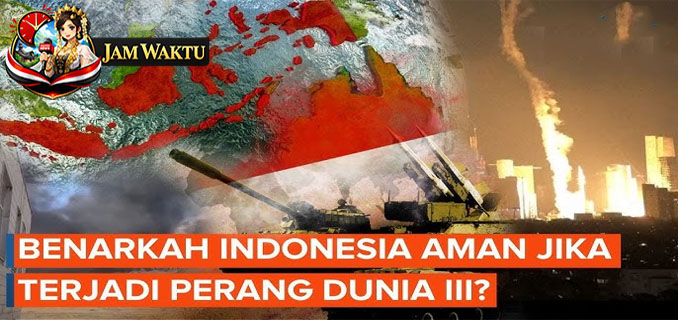
Jamwaktu.com – The discourse on World War III is no longer synonymous with the roar of guns or large-scale military invasions. A number of geopolitical observers believe that the current global conflict has entered a new phase, where economic warfare, information warfare, and technological competition are the primary battlegrounds between nations. In this context, World War III is not considered imminent, but is already underway in a more subtle form with far-reaching impacts, including for Indonesia.
Economic warfare is evident through trade sanctions, restrictions on technology exports, currency wars, and disruptions to global supply chains. Tensions between major world powers are triggering market instability, soaring energy and food prices, and putting pressure on developing countries. Indonesia, as part of the global economy, is not immune to these impacts. Exchange rate fluctuations, import dependence, and commodity price volatility are real challenges that must be addressed with mature policies.
Furthermore, information warfare has become a new and equally dangerous weapon. Disinformation, digital propaganda, and manipulation of public opinion spread rapidly through social media and digital platforms. Cyberattacks on vital infrastructure, financial institutions, and government systems pose a serious threat that can paralyze national stability without a single shot being fired. In this situation, information security and the public’s digital literacy are crucial factors.
Defense observers believe Indonesia needs to carefully consider this changing global landscape. The concept of national defense is no longer solely based on conventional military strength, but must encompass economic security, cybersecurity, and information sovereignty. Economically weak and socially divided nations will be more easily pressured in this new form of warfare.
The Indonesian government itself has demonstrated efforts toward strengthening a multidimensional national strategy. Diversifying trading partners, strengthening domestic industries, and downstreaming natural resources are important steps to reduce external dependence. In the digital sector, developing national cybersecurity and data protection are strategic agendas to counter the threat of non-physical attacks.
On the other hand, the role of the public is also considered crucial. Information warfare targets not only state institutions but also the public’s thoughts and emotions. Social polarization, identity conflicts, and the spread of hoaxes can weaken national unity. Therefore, improving media literacy, strengthening national values, and developing maturity in social media are essential components of national defense in the modern era.
Indonesia possesses significant resources for resilience and adaptation, including its strategic position in the Indo-Pacific region, its wealth of natural resources, and its demographic dividend. However, these resources must be managed with a long-term vision and cross-sector coordination. Food, energy, and financial security are crucial foundations to prevent Indonesia from being easily shaken by global pressures.
Analysts emphasize that an independent and active foreign policy remains relevant, but it must be accompanied by a careful understanding of global dynamics. In an increasingly fragmented world, Indonesia is required to maintain a balance in international relations without becoming entangled in conflicts of interest between major powers.
A 21st-century version of World War III may not be visible on the open battlefield, but its impact is real in people’s daily lives. Therefore, vigilance and strengthening of national strategy are imperative. With strong economic resilience, a secure information system, and strong social unity, Indonesia is expected to be able to face global challenges and remain strong amidst the ever-changing maelstrom of global conflict.