Jamwaktu.com – In a recent energy policy discussion forum, the Purnomo Yusgiantoro Center (PYC) reiterated its recommendation that the Indonesian government maintain a 40 percent biodiesel blend (B40) as the safe limit for the national biodiesel program. PYC believes this limit is the most realistic for maintaining a balance between fuel supplies, engine readiness, crude palm oil (CPO) supply, and the economic impact of energy amidst the dynamics of domestic demand.
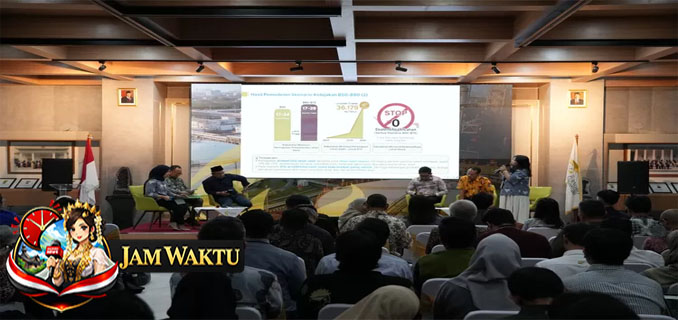
This recommendation emerged in PYC Talks Vol. 1, which addressed Indonesia’s energy transition strategy and energy security. Analysts and representatives from energy institutions discussed the challenges and opportunities of the biodiesel program in the medium to long term. Massita Ayu Cindy, PYC Research Coordinator, presented modeling results showing that B40 remains the optimal level for maintaining a balanced biodiesel supply-demand ratio without triggering pressure on rapidly depleting supplies.
Engine and Technology Readiness
One of the key highlights in the PYC recommendations is vehicle engine readiness and biodiesel application. Although Indonesia has already initiated a biodiesel program with various blending standards, from B20 to B40, there are a number of technical challenges that must be addressed before increasing the percentage to higher levels, such as B50 or higher. During the discussion, a representative from LEMIGAS emphasized that comprehensive engine compatibility tests are being conducted to ensure vehicle performance is not compromised when using 40 percent biodiesel blends.
“Technical tests show that while B40 is relatively safe for engines if proper fuel handling standards are met, increasing the blending level could potentially increase technical problems in the engine without further adjustments,” said a source present at the forum.
Meanwhile, independent automotive observers assessed that the transition to B40 has been relatively smooth compared to higher blends, such as B50 or B60. This is in line with the fact that B40 distribution in Indonesia has achieved a significant national allocation: distribution realization reached approximately 95.67 percent of the targeted allocation of 15.616 million kiloliters by 2025, indicating that infrastructure and market readiness support the B40 standard.
CPO Supply and Value Chain Challenges
From the energy supply side, the most crucial factor is the availability of CPO as the primary raw material for fatty acid methyl ester (FAME) in biodiesel. Besides its energy use, CPO is also a key commodity in the food sector and is a national export commodity. PYC highlights that if the biodiesel blending target is increased above B40, pressure on CPO supply will increase significantly and could create the risk of a supply deficit before the supply system is ready.
PYC modeling results show that in the baseline B40 scenario, the biodiesel supply-demand ratio only falls below 100 percent around 2042. However, in higher blending scenarios, such as B50 to B90, the ratio drops much more rapidly—even as early as 2030, accelerating structural pressure on energy and palm oil feedstock supplies.
“From a supply chain perspective, B40 is a safe limit that can maintain stable energy availability while not adding a significant burden to CPO, a commodity also needed by other sectors,” said Massita Ayu Cindy of PYC.
National Energy Economic Impact
Equally important is the energy economic impact arising from the B40 mandate. Data from the government and biofuel producer associations shows that the implementation of the B40 program has had a significant positive impact. For example, the B40 allocation is estimated to reach approximately 15.646 million kiloliters by 2026, improving the stability of domestic energy policy.
Furthermore, the B40 program has had a broad economic impact, including saving tens of trillions of rupiah in foreign exchange, increasing the added value of CPO into biodiesel, and absorbing a significant number of jobs from upstream to downstream in the supply chain. By 2025, B40 distribution reportedly triggered an increase in CPO added value of approximately IDR 20.9 trillion and created employment for up to 1.8 million people.
Energy analysts also assess that the sustainability of B40 can support Indonesia’s energy transition to more sustainable energy sources without creating significant pressure on the national energy balance or commodity markets. B40 is considered to reflect the efficient use of CPO, balancing energy needs and the national economy.
Conclusion: B40 as a Safe Limit for Biodiesel Policy
PYC’s recommendation to maintain B40 as the safe limit for the biodiesel program reflects the synergy between technical readiness, stable feedstock supply, and broad economic impact. This policy is expected to ensure strong national energy security, boost the added value of the palm oil industry, and support job creation without sacrificing other sectors in strategic commodities such as CPO.