
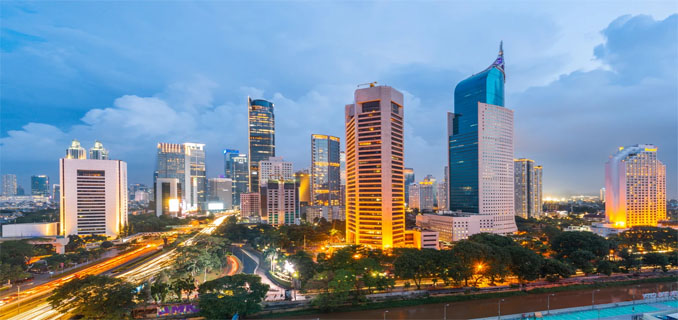
Jamwaktu.com – In a surprising demographic shift, Tokyo, Japan, known for decades as the world’s most populous city, has now slipped down the rankings. The latest United Nations (UN) World Urbanization Prospects 2025 report named Jakarta, the capital of Indonesia, as the world’s most populous city, replacing long-time Tokyo.
According to the UN report released in November 2025, Jakarta now has approximately 41.9 million residents, making it the world’s most populous megacity. Dhaka, the capital of Bangladesh, ranks second with nearly 36.6 million residents, while Tokyo has dropped to third with approximately 33.4 million.
Why the Ranking Change?
This change in ranking is not simply a number; it reflects a major shift in global urbanization patterns and the methodology for calculating urban populations. The UN uses World Urbanization Prospects 2025 to provide an updated picture of urban populations based on a more consistent approach worldwide, including interconnected metropolitan areas.
Metro Jakarta, often referred to as Greater Jakarta or Jabodetabek (Jakarta, Bogor, Depok, Tangerang, Bekasi), has experienced rapid growth over the past few decades. Rapid urbanization, migration from rural areas, and the concentration of economic activity have led to this region’s remarkable population growth.
Meanwhile, Tokyo has experienced relatively stagnant or slower growth than Jakarta and Dhaka, especially after decades as an established urban center with a more stable demographic structure and low birth rate.
The Global Impact of Urbanization
Jakarta’s rise as the world’s most populous city reflects the trend of intensifying urbanization in Asia, with nine of the world’s 10 largest megacities located in the region. Global urbanization reflects a major shift in the way people live: approximately 45% of the world’s population now lives in large cities, compared to around 20% in the mid-20th century.
The population growth of large cities presents various challenges, including the need for infrastructure, transportation, housing, healthcare, and environmental management. In Jakarta itself, high density has prompted efforts to improve public transportation and better urban planning.
Reactions and Implications from Various Stakeholders
This ranking change has received widespread attention from urban analysts and policymakers. According to urban studies experts, the phenomenon of Jakarta replacing Tokyo demonstrates that the rapid growth of metropolitan areas in developing countries is now a major force in global demographics. This also indicates that the definition of a large city is no longer based solely on administrative boundaries, but also on interconnected urban areas.
Some observers also note that, despite Jakarta’s top position in the UN report, the city’s challenges remain diverse, including flood risks, transportation issues, and the need for equitable basic services across the metropolitan area.
The Future of Global Urbanization
In addition to the latest data on Jakarta and Tokyo’s rankings, the UN report also forecasts future urbanization trends. According to UN projections, some cities, such as Dhaka, have the potential to become the world’s largest city by 2050 if population growth continues. Jakarta may retain its lead for the next few years, but the dynamics of global urbanization remain highly dynamic.
Furthermore, the number of megacities with more than 10 million residents continues to increase. By 2025, the number will reach 33, up from eight in 1975, demonstrating that urbanization remains a dominant trend in the 21st century.
Conclusion: Jakarta Takes Over Tokyo’s Throne
This ranking change marks a new chapter in the history of global urbanization. Jakarta now tops the list of largest cities by population, replacing Tokyo, which had held the lead for many years. Rapid urbanization in Asia, coupled with the new definition adopted by the United Nations, has reshaped the global megacity map a reality that reflects profound demographic and social changes in the modern era.