
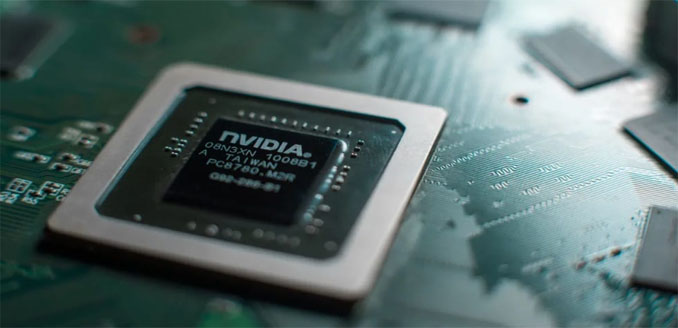
Jamwaktu.com – US President Donald Trump’s decision to approve the export of Nvidia H200 chips to China marks one of the most significant developments in the global technology industry throughout 2025. This move not only changes the trade dynamics between the world’s two economic giants but also marks a new chapter in the international artificial intelligence (AI) and supercomputing competition.
Previously, restrictions on exports of high-end American-made chips to China were imposed to limit the country’s ability to build advanced AI systems. However, amidst intense economic competition and the need to maintain the position of US companies in the global market, this policy has been adjusted. The approval of H200 exports symbolizes a shift in Washington’s strategy in managing the technology competition with Beijing.
The Nvidia H200 chip, the successor to the successful H100 series, is known as one of the world’s most advanced GPUs, with exceptional performance for running generative AI models, big data analysis, and large-scale scientific computing. Global demand for these chips is surging in line with the rapid adoption of AI across various industrial sectors, from healthcare and manufacturing to education and the military.
With this export approval, Chinese technology companies are expected to quickly gain access to previously highly restricted hardware. Analysts believe this move could accelerate China’s technological advancement, while also putting new pressure on US companies to continue innovating to avoid losing their edge.
For Nvidia, this policy is a breath of fresh air. China is one of its largest markets, and restrictions in recent years have drastically reduced data center GPU sales. With the market reopening, Nvidia is expected to see a significant revenue surge through 2025, especially as many Chinese tech companies are strengthening their AI infrastructure.
On the other hand, Trump’s approval has also sparked political debate both domestically and internationally. Pro-national security groups in the US believe the policy could potentially benefit strategic adversaries in the long term. They fear advanced technology like the H200 could enhance computing capabilities that could be used for Chinese military purposes.
However, supporters of this decision argue that the move is a strategy to maintain US companies’ dominance in the global semiconductor industry. By withholding exports for too long, the market could shift to alternative manufacturers, ultimately harming the US industry itself. Furthermore, export controls remain in place on certain components to ensure there is no potential for misuse.
In global markets, this news immediately impacted the stock prices of many technology companies. Nvidia shares surged as investors assessed potential revenue growth, while other chip companies like AMD and Intel adjusted their marketing strategies to face increasing competition.
For China, this approval opens the door to accelerated national AI development in the coming years. Many previously hampered startups, universities, and research laboratories can now move forward with the support of high-quality hardware.
Overall, the approval of Nvidia H200 exports to China marks an important milestone for the direction of global technology policy in 2025. This move will continue to be in the spotlight due to its far-reaching impact on economic stability, chip industry competition, and increasingly complex international geopolitics.